Hair Growth
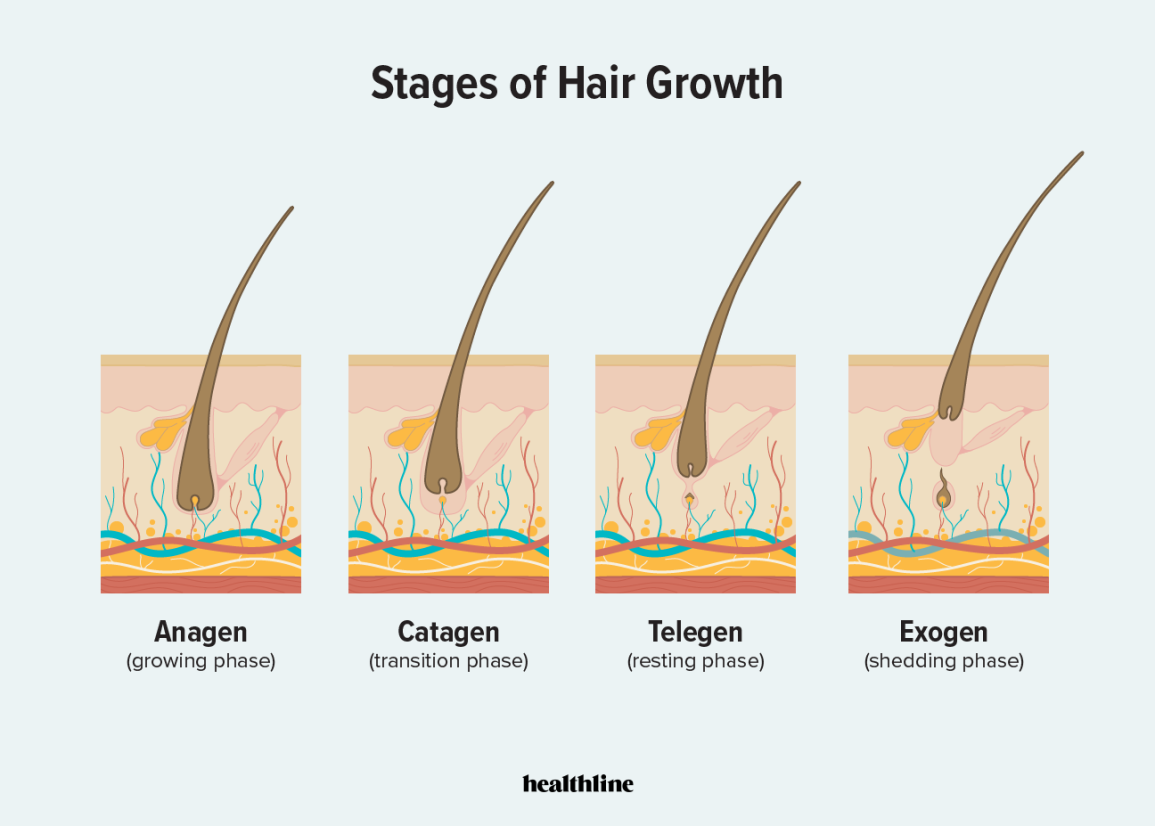
Hair growth is a natural cycle (Anagen, Catagen, Telogen) averaging about half an inch monthly, influenced by genetics, diet, stress, and age, with optimization through a protein-rich diet, scalp massage, minimal heat, and stress management supporting healthy growth. Key nutrients like protein, iron, zinc, and biotin are vital, while practices like scalp massages and using protective oils (castor, rosemary) or masks can improve scalp health, though no miracle cure exists for dramatically speeding up growth.
Tips to Support Hair Growth
Diet & Nutrition:
Eat protein (eggs, fish, nuts), iron (spinach), zinc (pumpkin seeds), and omega-3s (chia, walnuts) for strong hair.
Scalp Care:
Massage daily with oils like rosemary, castor, or coconut oil; use scalp treatments for buildup.
Gentle Handling:
Minimize heat styling, use heat protectants, avoid sleeping with wet hair, and use protective styles like braids.
Supplements:
Biotin, Vitamin D, Iron, Zinc, and specific supplements (Nutrafol) may help if deficient, but consult a doctor.
Stress Management:
High stress can hinder hair growth, so manage it effectively.
What to Avoid/Limit
Excessive Heat & Chemicals: Minimize bleaching, coloring, and high heat tools.
Certain Supplements: High doses of Vitamin A, E, and selenium can be harmful if you don't have a deficiency.
Effective treatments
For some types of hair loss are available. You might be able to reverse hair loss, or at least slow it. Treatments for hair loss range from over-the counter topical medication, and topical or oral prescriptions, to in-office procedures. Consult a dermatologist if you are concerned.