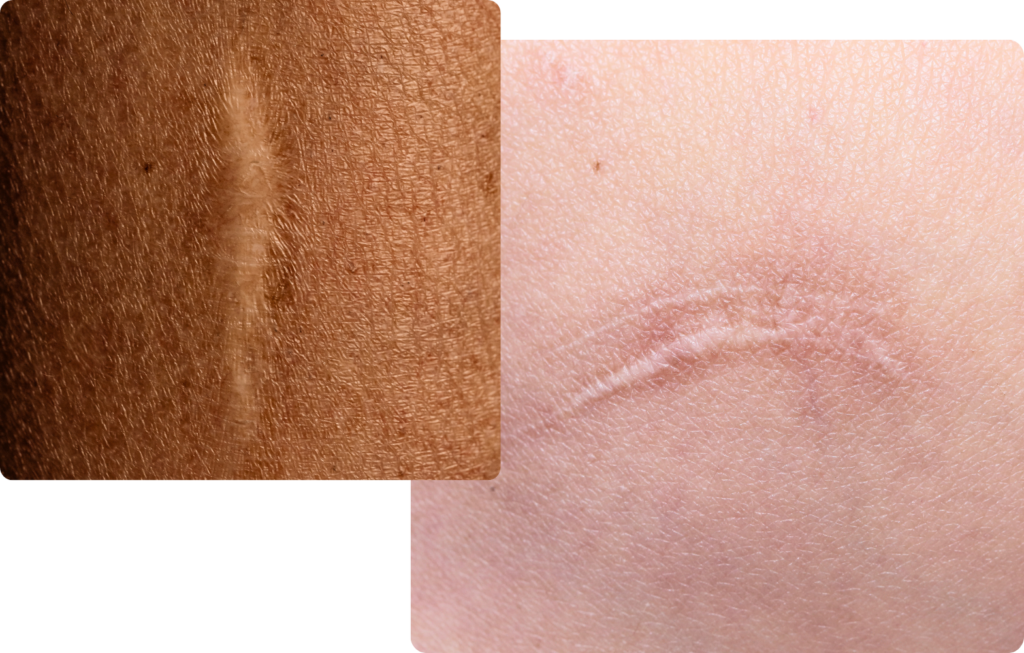
Scar
A scar is fibrous tissue that replaces normal skin after an injury, surgery, or disease, forming as the body's natural way to heal and repair damaged skin, appearing flat, raised, sunken, or colored.
What causes scars?
Injury/Accident: Cuts, scrapes, burns, or deep wounds.
Surgery: Incisions made during operations.
Skin Conditions: Severe acne or chickenpox.
Infections: Inflammation that damages tissue.
Main types of scars
Normal/Flat: Appears pink/red, then flattens and fades, blending with skin or becoming lighter/darker.
Hypertrophic: Thick, raised scar within the original wound boundary, often from excess collagen.
Keloid: Raised scar that grows larger than the original wound, common in darker skin tones.
Atrophic (Sunken): Depressed, sunken scar, often from acne or chickenpox due to collagen loss.
Care at home
Silicone Gels/Sheets: Protect skin and promote healthy healing.
Massage: Helps break down fluid and inflammation once healed.
Sun Protection: Keep scars covered or use SPF 30+ sunscreen for at least a year.
Scar Revision: Procedures like Z-plasty or grafts for significant scarring.
Moisturizers: Keep scar tissue hydrated.
Medical Treatments
Corticosteroid Injections: Used for raised scars like keloids, these injections can help flatten and soften the scar.
Laser Therapy: Various laser treatments can improve the appearance of scars by targeting specific skin layers.
Microneedling: This procedure involves using fine needles to create micro-injuries in the skin, promoting collagen production and improving scar texture.
Dermabrasion: A technique that sands down the top layer of skin to improve the appearance of scars.
Scar Revision: Procedures like Z-plasty or grafts for significant scarring.