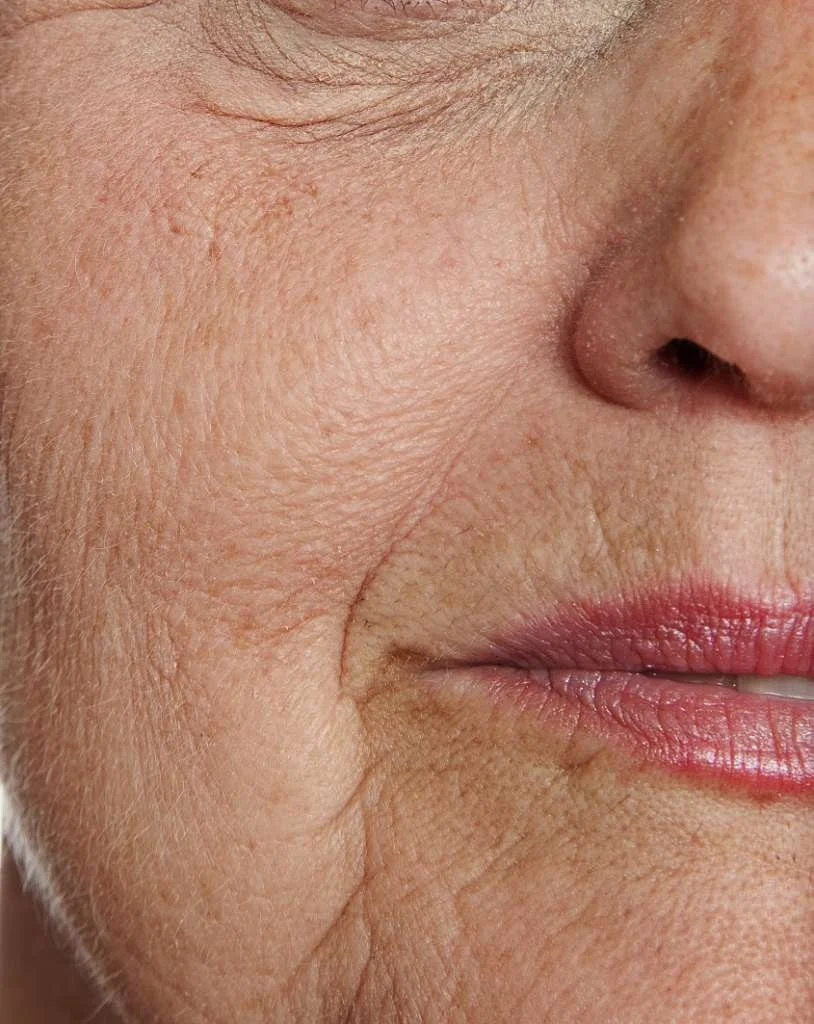
Aging
Aging skin involves natural changes like thinning, wrinkles, dryness, and age spots, caused by reduced collagen/elastin, slower cell turnover, and less oil, plus environmental factors like sun exposure (photoaging) and smoking, leading to fragility, sagging, and easy bruising, though lifestyle changes and treatments can help manage these signs.
Outer layer (epidermis) thins, making skin transparent and prone to bruising and tears.
Loss of collagen and elastin (proteins for firmness) causes lines, folds, and sagging.
Pigment cells (melanocytes) decrease, leading to pale spots, while remaining cells enlarge, causing brown spots (lentigos).
Glands produce less oil (sebum) and sweat, making skin drier.
Bruising & Broken Capillaries:
Blood vessels become more fragile, causing easier bruising (senile purpura) and visible broken vessels (cherry angiomas).
Natural, genetic process involving slower skin cell turnover, less collagen/elastin, and hormonal changes (like menopause).
Primarily caused by sun exposure (UV light), leading to up to 80% of visible aging, causing wrinkles, spots, and texture changes.
Smoking significantly increases wrinkles; stress, pollution, and poor diet also play roles.
Sun Protection: Daily sunscreen (SPF 15+), protective clothing, and avoiding peak sun hours are crucial.
Moisturize: Regular moisturizing helps with dryness.
Healthy Habits: Avoid smoking, stay hydrated, and manage stress.
Professional Treatments: Dermatologists offer options like topical retinoids, chemical peels, neurotoxin, lasers, fillers, and other therapies for more significant concerns.